
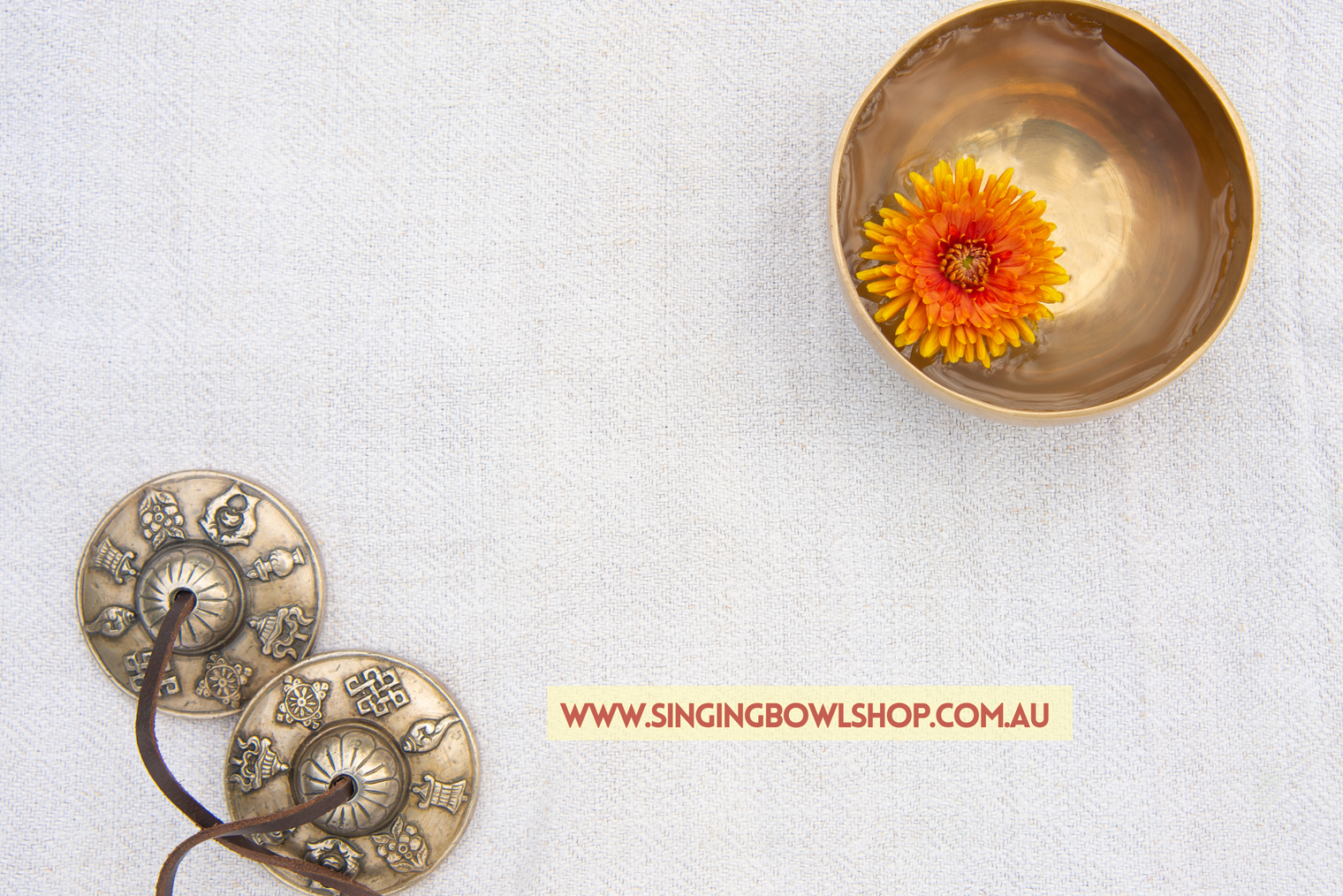
Learn what Tingsha cymbals are, how they are made, their traditional Tibetan context, sound, common uses and basic care.
In the realm of mindfulness and meditation, there exists a source of tools and techniques from diverse cultural backgrounds. One such gem is the Tingsha, an ancient Tibetan meditation tool that has captured the fascination of practitioners worldwide. In this blog, we embark on a journey to unravel the mysteries and benefits of Tingsha, exploring its history, purpose, and the role it can have on your meditation practice.
A Glimpse into Tibetan Culture
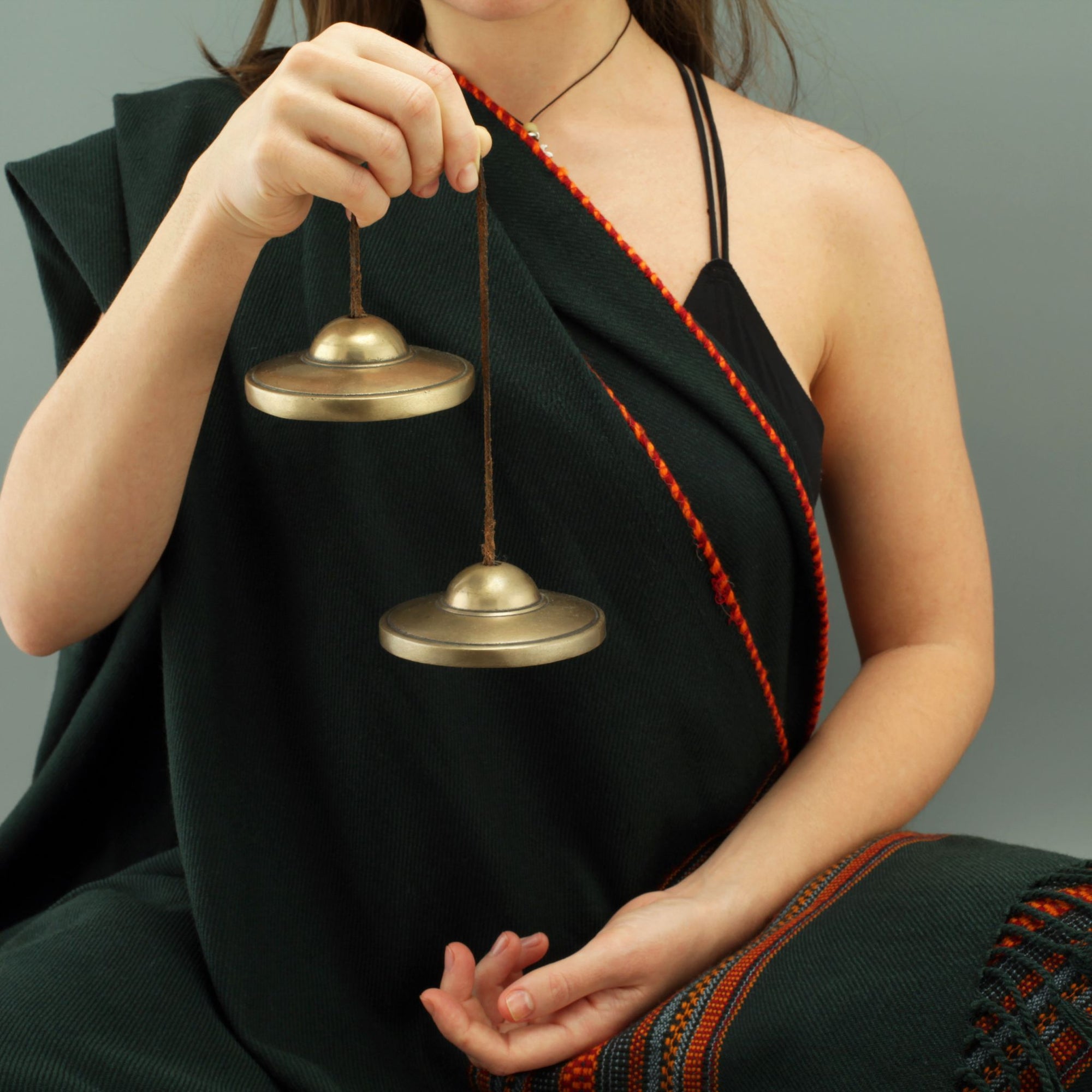
Tingsha, pronounced 'ting-shah,' is deeply embedded in Tibetan culture, which has a rich history of spiritual practices and traditions. The word 'Tingsha' itself is derived from Tibetan, where 'Ting' means 'to hear' and 'Sha' means 'the sound.' Together, they encapsulate the essence of what this tool is all about - producing a resonant sound used to mark ritual, meditation and moments of focused attention.
The Anatomy of Tingsha
Tingsha consists of two small, circular cymbals, traditionally made of metal alloys with a high percentage of bell metal. These cymbals are often decorated with intricate designs, reflecting the artistry and craftsmanship of Tibetan artisans. The cymbals are connected by a leather strap, allowing them to be struck together or individually.
History and Origin
The origins of Tingsha can be traced back to ancient Tibet, where they were used in various religious ceremonies, rituals, and meditation practices. Tibetan monks, renowned for their deep spiritual wisdom, incorporated Tingsha into their meditative routines, recognizing the role of sound on the human mind and soul.
The Purpose of Tingsha
Tingsha serves multiple purposes in the realm of meditation and personal practice:
mindfulness and Focus: The clear, resonant sound produced by Tingsha serves as an anchor for the mind.
Traditional space-clearing use: In Tibetan culture, Tingsha are traditionally sounded during space-clearing rituals. The reverberations of the cymbals are believed to dispel stagnant or harmful energies, creating a more harmonious environment.
Beginning and Ending meditation sessions: The melodious chime of Tingsha can mark the commencement and conclusion of a meditation sessions, providing a gentle and uplifting transition into and out of the practice.
sound practice and relaxation: Beyond meditation, Tingsha are utilized in sound sessions.
Using Tingsha in Your meditation practice

Incorporating Tingsha into your meditation routine can be a sound and design. Here's how you can get started:
Selecting the Right Tingsha: When choosing Tingsha, consider the quality of the metal, craftsmanship, and the resonance of the sound. Opt for a pair that resonates with you on a personal level.
Finding the Perfect Setting: Create a serene space for your meditation practice. Find a quiet, comfortable spot where you won't be disturbed.
Begin with Intention: Before striking the Tingsha, set a clear intention for your meditation. This could be to find inner peace, cultivate gratitude, or any other goal you wish to achieve.
Striking the Tingsha: Hold the leather strap and gently strike the cymbals together. Allow the sound to wash over you, focusing your attention on its vibrations.
Deepening Your Practice: As you become more accustomed to Tingsha, experiment with different techniques. Try striking the cymbals at varying intensities or durations to see how the sound impacts your meditation experience.
Conclusion: Embracing the Harmony of Tingsha
Tingsha, with its roots deep in Tibetan culture, has a clear sustained voice that is now used in both traditional ceremonial settings and contemporary mindfulness practices. By incorporating Tingsha into your meditation practice, you open a gateway to a deeper, more distinct state of inner peace and self-awareness. So, embark on this enchanting journey, let the resonant tones guide you, and Learn about the traditional role of Tingsha for yourself.